Description
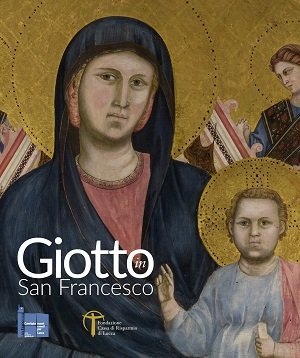
For the first time a work by Giotto is exhibited in Lucca. What the Florentine painter never did when he was alive, having crossed Tuscany on several occasions without reaching Lucca, he will do now, seven hundred years later, with what is most authentic, alive and concrete fuels our days: his art. Revolutionary, timeless, capable of creating real and solid bodies in space even if painted on a board or on a wall. Just like the Madonna of San Giorgio alla Costa, the masterpiece that the New Events for Lucca Committee (an organization created by the Cassa di Risparmio di Lucca Foundation and the Ragghianti Foundation) brings to the city on October 4th, on the anniversary of the Feast of St. Francis.
Giotto in San Francesco is the title of the exhibition, which will feature a single work by Cimabue’s pupil, on display for two months, until 8 December, in the Church of San Franceschetto, annexed to the monumental complex dedicated to the Saint of Assisi.
The operation is intended to be the crowning achievement of a strong artistic path rooted in the Lucca area, where there are also significant testimonies of painting prior to the revolution operated by Giotto. The Madonna di San Giorgio alla Costa thus constitutes a sort of missing piece for the reconstruction of an artistic period – the medieval one – which also in Lucca experienced episodes of great liveliness and splendor, as well demonstrated by the artistic evidence referable to the twelfth and thirteenth centuries present in the area.
Giotto, unanimously recognized as the first great iconographer of the Saint of Assisi and as the most direct artistic interpreter of the poetics of faith, life and sensitivity of the Assisiate, created this work, datable to around 1295, in the years of his youth in which the characteristics of his pictorial revolution of detachment from the unnatural stylization of previous centuries are even more evident.
The masterpiece, from the Diocesan Museum of Santo Stefano al Ponte in Florence, was involved in the attack on Via dei Georgofili on the night between 26 and 27 May 1993. On that occasion, the Madonna was pierced by a myriad of shards of glass, beginning a very long restoration process, entrusted to the skilled hands of Paola Bracco of the Opificio delle Pietre Dure in Florence.
The return to the city of the convent complex of San Francesco marked the season of ‘new spaces’ for the city. By these we mean the urban context revitalized by the grandiose restoration work, in which even the ‘ancient’ spaces, until now degraded and forgotten, have returned to shine, as ‘new’. After the ‘new spaces’ for the city, now the ‘new events’ for the city are born. Always, rigorously, in quotation marks, to signify that we do not want to overlap with anyone, but only to propose a series of cultural, artistic and entertainment events in the less frequented periods, that is, in autumn-winter, in order to enrich and expand temporally the cultural offer that the city of Lucca offers to an increasingly demanding local, regional and national tourism. And this, according to a vision that wants foundations to assume an exclusively subsidiary role with respect to institutions, public and private bodies.